Butterfly Gardening by TGU’s Melody Wilson
Images by Melody Wilson.

Images from TGU’s wholesale nursery.

Images from TGU’s wholesale nursery.

Host Plant & Most Common Visitor

Host Plant & Most Common Visitor

Common nectar plants.

Common nectar plants.

For More Information:

 Please check out:

North American Butterfly Association https://nababutterfly.com/

Texas A&M Harris County http://counties.agrilife.org/harris/files/2011/05/bflygrdn.pdf

Butterflies and Moths of North America  https://www.butterfliesandmoths.org/


Author: Melody Wilson

Contact: melody.wilson@thegroundup.com

The warmer months of July and August bring sightings of many different types of butterflies in the Houston area, we can see butterflies and moths almost year-round in Southeast Texas. Starting a butterfly garden can be as easy as planting a variety of colorful flowering plants to attract the feeding adult butterflies. With some planning, your butterfly garden can become a haven for all stages of the butterfly life cycle and multiple species of these beautiful pollinators.
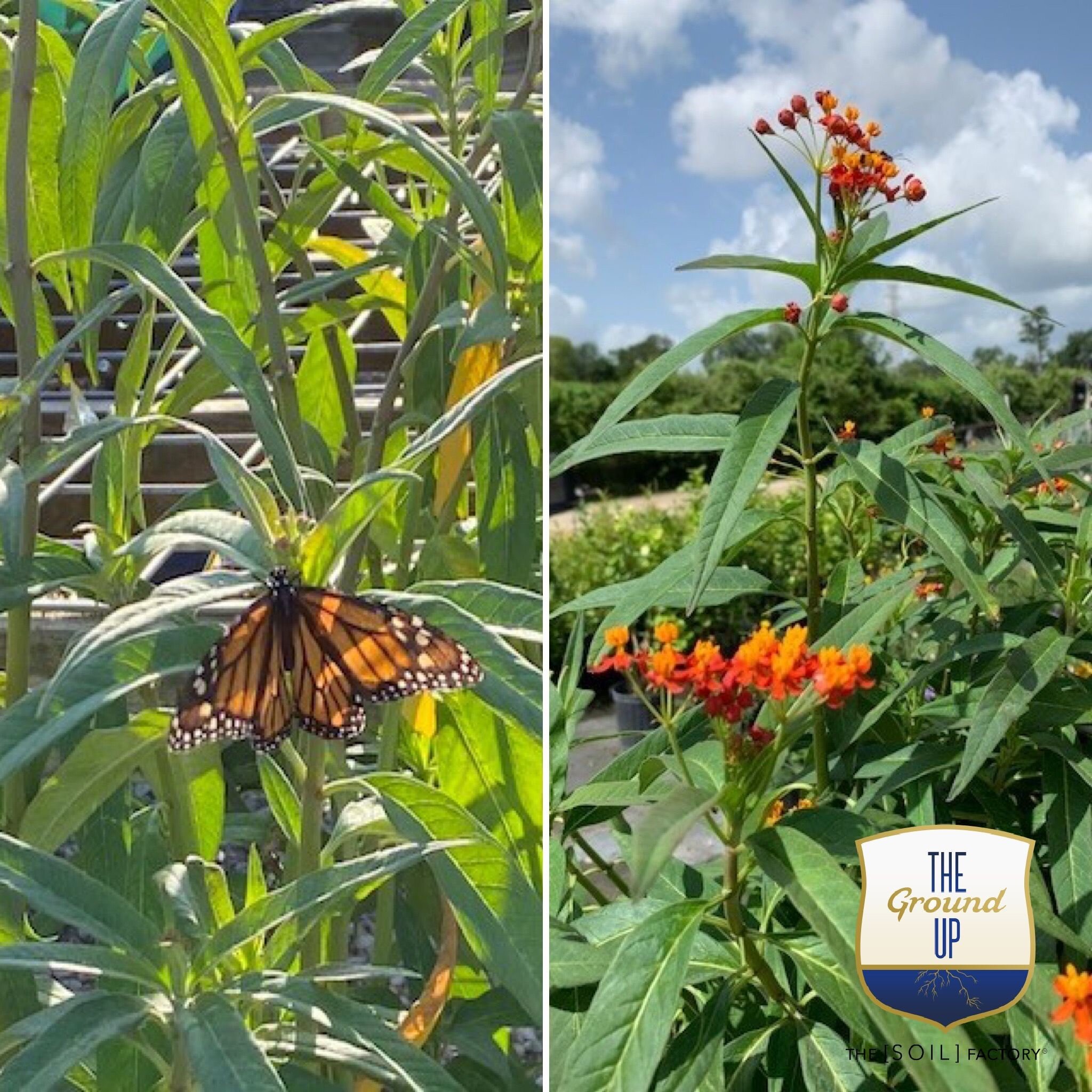
I started on my journey in butterfly gardening when we moved into our new house last July. It took a little bit to wrap my head around planting plants solely to be a food source, but now I’m hooked. I have lost count of the number of pots of Asclepias that I have put in to feed my hungry little cats. 

Our perennial pad at The Ground Up is bursting with pollinator-friendly plants right now, and when I took a short walk through the nursery and saw several different butterfly species in the perennial area without any difficulty, I knew I would be adding to my pollinator paradise.

Life Cycle

 An adult butterfly will lay eggs on a host plant. Once the eggs hatch, the larva (caterpillars) will eat the host plant, often to the point of complete defoliation. Once the caterpillars are large enough, they will pupate and eventually become butterflies. The adult butterflies will feed on nectar from a variety of flowers, mate for the cycle to begin again.

Things to Consider

 A butterfly habitat needs the same basic needs as we do: they require a sheltered area, water, food (for both the larva and adults), and a bright sunny area. Having a row of trees and shrubs will protect the butterflies from the weather and wind.

Your butterfly garden needs a space that gets full sun as most of the plants that attract butterflies are sun-loving.

Placing flat stones, or places for the butterflies to perch and sunbathe in your butterfly garden allows them a resting area where they can raise their body temperature when it is cooler.

The addition of shallow pools or puddles with sand and soil allows them a place to drink. There are no safe pesticides in a butterfly garden. All insecticides are toxic to butterflies and caterpillars.

Plants

 It’s a good idea to become familiar with the different host plants that each species of butterfly prefers so you can attract butterflies you want to see. This is by no means the entire list of Nectar and Host Plants for our area, but a pretty good example to start with. Planting large masses of color, will attract more butterflies, and planting a variety of flowers of different heights with different bloom periods that span throughout the season is the best way to provide a steady supply of nectar for the adult butterflies.

From Randy Lemmon’s Garden Line e-blast – Horticultural Freeze Recovery After Uri!

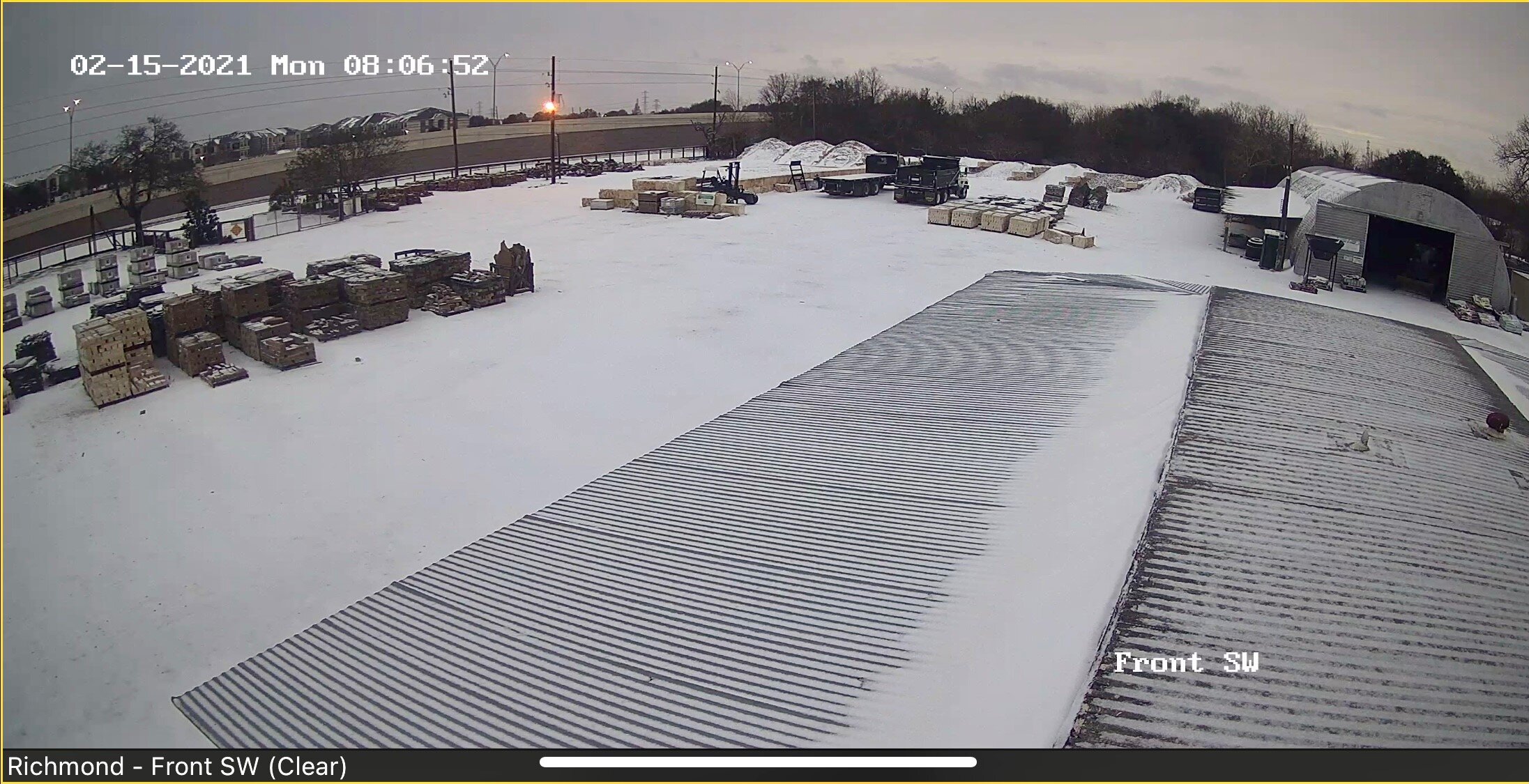
Richmond Snow.jpg

Horticultural Freeze Recovery After Uri!

First off, if you weren’t aware, they did name this winter storm Uri! So, after Uri, there’s a bit of a horticultural Armageddon we will all be facing. But if I can impart a bit of “patience” on the cleanup and cut back is because we still have another night of freezing temperatures ahead. So, for those of you anxious to get out and start cutting back and removing bits and pieces that you think is dead, let’s hold off until at least next week. I think it’ll be better if we let the 60 & 70 degree highs set in for a few days before I suggest the major cleanup and cutback begins.
I suspect we will be cleaning out more than ever before, and cutting back more than ever compared to any other freeze we’ve had since 2011. And if you’ve ever seen my rules on Freeze Recovery for the Landscape, there’s really no changes, but I still thought it was worth revising a bit here and there, no thanks to Uri!

While the rules below and pretty consistent with regards to past freezes and even what happened in late January of this year, the first thing I want everyone doing on Friday morning is removing any ‘trunk covers/wraps” because we’ve got to get them breathing as soon as possible. Plus, by getting a sneak- peak at these trunks before any cutback and/or removal, we’ll know pretty quickly if they survived Uri or not!!!
So, here are my rules for Freeze Recovery, but we’ll be employing them on such a deeper level than ever before!

1. If it’s crispy and brown, cut it back to green wood. Hibiscus, lantana, hamelia and other perennials are great examples. Or just leave crispy and brown freeze-damaged plants alone until you feel certain no more freezing weather is ahead. If you do cut back damaged plants to green wood, be sure to super-protect them if another freeze is forecast. There are two reasons: A. The fresh cut will act like a straw, pulling freezing temperatures directly into the plant. That can totally kill a perennial that otherwise could handle such weather. B. If you cut back, and temperate weather prompts new growth, the new parts will be highly susceptible to damage from any future freeze.

2. If you cut a brown-and-crispy plant to the ground and see no sign of green, but the root system seems to be firmly locked in, consider leaving it alone to see if it comes back from that root system. Be sure to protect what’s left during any future freeze. If, however, the root system moves around easily — like a car’s stick shift — it’s dead. You can remove the whole thing.

3. If it’s mushy, gushy, ooey or gooey, get rid of it! Cut it out, remove it – do whatever it takes to get the nasty stuff out of there. If you cut all the spongy parts away from tropicals like bananas or split-leaf philodendrons, you’ll likely be left with just a tiny bit of green material near the ground. Protect that from future freezes that can kill root system. But you really need to get the squishy stuff out, because it could harbor fungal diseases that will be pulled into the remaining plant.

4. If a palm frond (those of queen palms are good examples) is drooping over, cut it out or back. If a palm frond is standing up, leave it alone. After the January 2010 freeze, we had to wait months before we knew if some palms were coming back. The only true way to determine if a palm is dead is to examine the inside of the crown, where new growth emerges. But most of us don’t have equipment or ladders tall enough to do such visual observations. A racquetball buddy who was worried about his queen palms sent me a picture saying he thought they looked fine to him. I told him that I didn’t want to rain on his parade, but he might not know the full extent of some palm damage for another 30-45 days. This is a good use for drone cameras! I can assure you that any of the soft-trunked palms (Queen Palm is the perfect example) that weren’t wrapped at all prior to Uri, they are not going to make it. They can barely handle a few hours at 20 degrees and in most of the area we had something like 22 cumulative hours below 20 degrees.

5. On palms small enough to get to the fronds (a dwarf pygmy date palm is an example), pull on those in the interior to see if they stay attached. If they easily slide out, the plant is dead. If they hold tight, the plant may still be alive, but you will have to wait and see. And if you removed some fronds, but you think the palm may still be alive, remember to protect the open slots during any future freeze. Otherwise, dangerous cold will be drawn into the plant through those open areas.

6. If you feel confident that we’ll get no more hard freezes through mid-February, it’s time to “scalp” the yard. Essentially, you’ll try to vacuum up any dead grass so live roots are open to air, sunshine, water and fertilizer. But, I think we need to wait a full two weeks before we can and should do this. Scalping is done by mowing with the mower deck lowered a notch or two. Years ago, a scalping would mean lowering the mower by 2-4 notches. These days, though, we know it’s better to give the lawn more of a “haircut.” But, again, you have believe there are no more freezes coming. Otherwise, just rake out as much debris as possible and skip the mowing. As you might suspect, another hard freeze could actually kill a scalped St. Augustine lawn.

7. If you think your St. Augustine lawn has a lot of thatch built up, don’t mechanically de-thatch – give it a haircut instead. There are products – essentially anything containing humus or humates, molasses, and now newer products like the trace mineral/trace elements in the products from Nature’s Way, Soil Mender and Azomite. Any of these products will help break down the thatch

8. Citrus Care Post Freeze – If you were able to salvage the trunks of the tropical fruits like Citrus, Avocado & Papaya, by insane trunk wrapping, and saving the graft (mostly related to the citrus) then we will need to prune them back as early as this Saturday, even if they were pruned in early February as we encouraged on GardenLine. When we had the Polar Vortex here in Houston in January of 2014, and then the Ninja Freeze in March, where we went from 78 to 28 degrees in hours and no one saw it coming. The predictions for lows were at most 40 degrees. Well, needless to say many citrus trees were in bloom and baby fruit was forming. Yet, we were still able to save so many citrus by re-pruning and aggressively feeding from that point on. So, again, if the trunk and/or the graft was saved, I can truly help you bring citrus and avocado back from the brink.

5 Ways Artificial Turf Can Add A Unique Touch To Your Garden


It’s a given that artificial turf can provide a practical classic lawn. However, if your heart is set on more modern landscape design, have no fear artificial turf can make those cutting-edge dreams come true!

1.  Creating Unique Designs

 For instance, you might want to create an interesting path or design with stone but don’t want the hassle of maintaining a certain grass length to achieve the design.

Artificial turf can be the perfect solution! The feasibility of how it can be cut and shaped allows for someone with a strong creative side to go wild! 

2. Who Says Grass Can’t Be Inside?

The great thing about using artificial turf there’s literally no limit on where and how it can be used.  For instance, whose to say synthetic grass can only be used outdoors?

Artificial Turf Man Cave.jpg

Look how this room was transformed to the ultimate man cave with the use of artificial turf. Not only will it make you feel you’re on the playing field but its a quick clean up when someone inevitably spills the chips and salsa.

3.   Artificial Turf Meets Modern Art

Do you find yourself wishing your home could be as aesthetically pleasing as the art hanging on your walls?

Using such versatile material such as artificial turf can make that dream into a reality. Not only can artificial turf be cut into any shape or length, you don’t have to patiently wait for your material to grow. So the next time you’re at your favorite museum don’t be surprised if inspiration strikes for your next garden project!

4.  Artificial Turf Pool Side

Are you tired of having to run out of the pool because of the burning concrete? Artificial turf has the perfect solution that will have your feet thanking you and your neighbor envious of your modern approach.

Artificial turf can brighten up any area in your home especially your pool deck. It’s durable nature makes it perfect for heavy foot traffic and won’t get ruined by excess water.

5.  City Life Craving the Country

Have you moved into the city but are yearning for the greenery of the country? Don’t fret artificial turf can easily transform any dull and dreary space in your provincial oasis. 

This will not only bring a pop of color to your home but a boost to your lifestyle. Forget the frustration of maintaining and creating a natural garden. Now you will be able to provide an outdoor space perfect for entertaining without the hassle. 


WRITTEN BY

Erika Simmonds


Dig a Little Deeper!


In celebration of International Compost Awareness Week, I invite our readers to dig a little deeper into the many benefits of utilizing compost.  

In a nutshell all composting is, is just nature’s way of recycling. It is a natural process of breaking down organic matter and turning it back into a rich nourishing substance. With this comes a lot of nutrition and benefits for your landscaping and gardening. Microorganisms produce a rich earthy substance called humus that is the key component in producing fine compost. Though most people think that compost is a fertilizer, it is actually a soil amendment. Fertilizers add nutrients to soil; while amendments improve the soil so that plants can make use of those nutrients. A simple way to distinguish the two is to remember that compost feeds the soil and fertilizer feeds the plant.

What Can Compost Do For You?

  • Supply nutrients for plants by providing surfaces where nutrients can be held in reserve in the soil
  • Reduces the need for chemical fertilizers.
  • Facilitate better drainage by loosening soil structure 
  • Use less water; Store water in the soil 
  • Help increase air drainage 
  • Increase the activity and numbers of soil microorganisms 
  • Encourage earthworms
  • Enhances the ability of vegetables to stand up to common diseases and may improve their flavor and nutrition
  • Compost can benefit year-round
  • Helps balance the pH of your soil

My Organic Compost DS: Goodness in a Bag

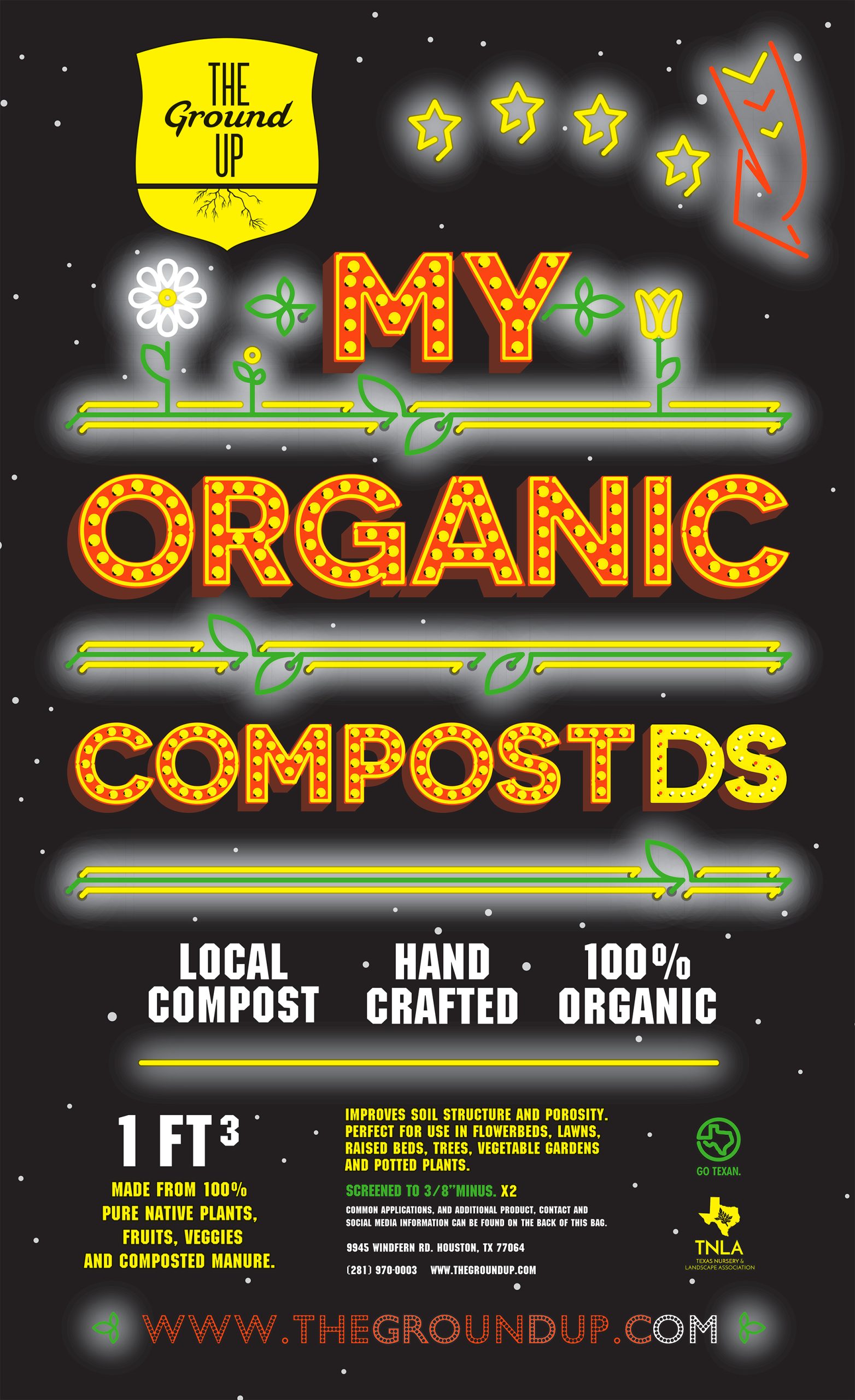
We celebrated this week by releasing our new “My Organic Compost DS” bag design. This double screened goodness will be available to you in a few weeks at any of our locations. We love it and we know you will too. 


Why DS? 

DS is made from leaf mold, wood, vegetative debris. We ground up the raw materials and make windrow piles by folding fruits and veggies into the piles. The juices from the fruits and veggie keep the compost with an optimum moisture content during the composting process. In addtion, we also populate the piles with a microbe pack that allows for better composting. The piles then are turned and once the pile is mature and ready for processing, we screen a 1st batch with a 3/8″ screen. This product is now called Vegan Compost. The following step is to take batches of Vegan Compost and screen again. For every yard of Vegan Compost we double screen we get 60% of Finished DS product.

How can you use our Compost DS?

 Our compost DS is probably one of the finest fungal compost products you will see anywhere in the US. It’s perfect for top dressing, amending, tilling, mulching, spot treating and as a general use compost.

Compost Tip:

Spread about a half-inch to an inch of compost around your trees, shrubs, and/or your lawn, and in your annuals and vegetable gardens. In established gardens, spread the compost on top of the soil, where it will eventually seep into the ground below; or you can lightly fork it over. This can help improve the first 6–10 inches.
 

Questions about our Compost DS or just compost in general? Head on over to www.thegroundup.com/askusanything and ask away!  We are happy to answer any questions you may have. If you’d like to see samples of our Compost DS, please visit one of our locations and we will show you this goodness packaged in a 1 cubic footbag!


The Underground Secret to a Better Garden

Mycorrhizal Fungi: 

Let’s talk basics. What exactly is Mycorrhizal Fungi? 


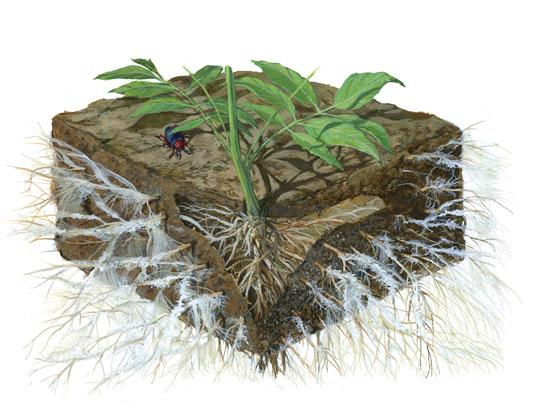
The term mycorrhiza refers to the role of the fungi in the plants’ rhizosphere, its root system. (Illustration by Michael Rothman)


A Mycorrhiza is a symbiotic association between a fungus and the roots of a vascular host plant. It’s major function being the ability to exchange nutrients between their surroundings and their host plant. A white fungal network called hyphae (resembles roots) is the principal structure for the uptake of many important nutrients in the plant kingdom. The hyphae are only a single cell wide and facilitate nutrient exchanges between the root tip and fungi. While you may see them spread like a web surfacing a decomposing log, they usually remain hidden underground and invisible to us. 

In the Garden

As a gardener, you want to take advantage of this symbiotic relationship that fungi and plants have been developing for millions of years. The key lies in maintaining a healthy community of fungi. One trick is to use caution when dealing with fertilizers and stray away from the use of chemical fertilizers specifically those consisting of phosphorus. Since phosphorus can reach levels that actually discourage the formation of mycorrhizae, avoiding fertilizers with high percentages of the chemical will prevent beneficial microbes from weakening or breaking apart. You can also maintain your soil in prime condition by minimizing disturbances apart from occasional light tilling, weeding and mulching. 

Increasing Beneficial Fungi

One of your main challenges perhaps will be ensuring that this nutrient-infused goodness survives all year round. The fungi that support garden crops are not capable of living or reproducing independently so it is up to us gardeners to ensure we are maintaining and increasing the population of beneficial fungi.

We can start by preventing a decline with simple tricks such as rotating crops within your beds and avoiding empty beds by keeping plants growing at all times. Additionally, you want to take it a step further and consider growing plant rye, oats or hairy vetch. These plants have extensive root systems and readily harbor mycorrhizae. Orchards will serve you well for overwintering fungi because they don’t require as much attention and buffer strips of a grass-and-legume blend will help retain fungi.  

The Benefits

    • Improved plant establishment and growth.
    • Dramatically expand access to moisture and nutrients from the soil. 
    • Increased nutrient and water uptake. 
    • Increases efficiency of water use.
    • Drought tolerance. 
    • Improved disease resistance.
    • Assists in weed suppression.
    • Improves soil structure and stability.
    • Improves root growth.
    • More blossoms and enhances nutritional value. 

    Mycorrhizae are the principal structures for the most nutrient uptake in the plant kingdom.

    Are you familiar with Mycorrhizal Fungi? Tricks of your own? What has been your experience? We want to hear all about it! Shoot us your comments below!